
If sleep has become a nightly negotiation (hot, cold, wide awake, then somehow exhausted by breakfast) you’re not imagining it. Sleep problems in perimenopause are common, but they don’t all have the same cause. Night sweats may be part of the picture; so might stress, restless legs, sleep apnea, pain or a medication that no longer agrees with you.
The useful question isn’t just “How do I sleep better?” It’s “What’s waking me up, and what might help that specific thing?”
Here are ten possibilities, and some sensible next steps. If you’re often awake around the same time, our companion guide on why you wake at 3am takes a closer look at that particular pattern.
1. Night sweats and hot flashes are interrupting sleep
A hot flash can wake you, and sweating and cooling down can make it harder to settle again: hot flashes and poorer sleep travel together through the menopause transition. Repeated interruptions can leave you feeling as though you barely slept. Yet hot flashes don’t explain every sleepless night, and some people have sleep problems without noticeable night sweats.
What may help: Notice whether awakenings line up with feeling hot or sweaty. Keep the bedroom comfortably cool, and choose bedding and sleepwear you can adjust easily. If night sweats are frequent or affecting your life, talk to your doctor about treatments for menopausal symptoms.
2. Hormone changes may affect sleep, even without night sweats
Hormone levels shift during perimenopause, and changes in reproductive hormones ride along with more waking during the night. That doesn’t mean hormones are the only cause, or that everyone’s sleep is affected in the same way. The science is still developing.
Hormone therapy has a specific role: it replaces hormones the body no longer produces and can help with troublesome menopause symptoms such as hot flashes (NICE guidance covers when that conversation is worth having). It isn’t a universal treatment for insomnia, so discuss your own symptoms and health history with your doctor.
3. Your brain has learned to stay on alert
After enough broken nights, bedtime can start to feel like a test you’re failing. You notice every sound, check the clock, calculate how little sleep is left, and become more alert. This cycle can persist even when the original trigger, such as a hot flash, is less of a problem.
For ongoing insomnia, cognitive behavioral therapy for insomnia (CBT-I) is a well-supported first-line treatment. It uses practical strategies to change patterns that keep insomnia going. It’s more than general advice about sleep hygiene, and it can be delivered in person or through structured programs.

4. Stress, anxiety or low mood are in the mix
Perimenopause can overlap with busy, demanding years: work, caring responsibilities, changing health, and the occasional brain that decides 2am is an excellent time to revisit an awkward conversation from 2009. Anxiety or low mood can make sleep harder; poor sleep can make both feel worse.
If worry or low mood is persistent, distressing or interfering with daily life, tell your doctor. Support for mood and sleep can be addressed alongside any menopause symptoms.
5. Sleep apnea may be going unnoticed
Obstructive sleep apnea causes breathing to repeatedly narrow or pause during sleep. It becomes more common around and after menopause. It doesn’t always look like the classic “loud snoring” stereotype: some people mainly notice fatigue, morning headaches, poor concentration or waking unrefreshed.
Mention it to your doctor if you snore, wake gasping, have been told you stop breathing, or feel very sleepy during the day. A clinician can assess whether a sleep study is appropriate.
6. Restless legs, or low iron, are keeping you awake
Restless legs syndrome can cause an uncomfortable urge to move your legs, usually when you’re resting and more often in the evening. It can make falling asleep difficult or disturb sleep once you do. Heavy periods can also lead to low iron, which is worth discussing if you have symptoms or ongoing heavy bleeding.
Tell your doctor about leg sensations and bleeding changes. They may recommend checking iron levels. Don’t start iron supplements without advice: taking iron when you don’t need it can be harmful.
7. Pain, reflux, bladder symptoms or other changes are waking you
A sore shoulder, reflux, needing to urinate, or another health issue can interrupt sleep, and may have nothing to do with menopause, even if it arrives at the same time. New, worsening or persistent symptoms deserve attention rather than being written off as “just peri.”
Keep a short note of what wakes you and any symptoms you notice. It can help your doctor decide what to assess.
8. Alcohol, caffeine or nicotine may be disturbing the second half of the night
Alcohol can leave you sleepy at first, then fragment sleep later in the night, and caffeine can linger for hours. Nicotine is stimulating too. People vary in their sensitivity, so there’s no magic cut-off that suits everyone.
Try a small, trackable experiment: move caffeine earlier, avoid alcohol close to bedtime, or reduce evening nicotine if relevant. Change one thing at a time so you can tell whether it makes a difference.
9. Your routine or sleep environment isn’t supporting sleep
A changing schedule, sleeping in late after a rough night, late naps or a bedroom that’s noisy, bright or too warm can all work against sleep. These aren’t moral failings. They’re factors you can review, without expecting a perfect routine to cure every sleep problem.
A steady wake-up time can help anchor your day. Regular movement is good for overall health and can support sleep too; it doesn��t need to be an intense evening workout. If you’re awake for a while, a quiet activity in low light may be more helpful than clock-watching in bed.

10. A health condition or medication is part of the picture
Thyroid problems, anemia, pain, mood conditions and some medicines can affect sleep. A medicine might cause alertness, vivid dreams or nighttime symptoms; the timing of a dose can matter. Don’t stop a prescribed medicine suddenly. Ask your doctor or pharmacist to review it with you.
A good assessment starts with the whole story: when the problem began, what your nights are like, what symptoms wake you, your medicines and supplements, and how you feel during the day. Tests are guided by what you report and what your clinician finds, not by a need to test everything.
What to do next
For a week or two, jot down bedtime, wake time, awakenings, hot flashes, leg symptoms, alcohol and caffeine, and how you feel the next day. Look for patterns, not a perfect score. Take the notes to your doctor, especially if sleep problems are persistent, affecting your daily life, or accompanied by symptoms such as gasping during sleep, heavy bleeding or severe daytime sleepiness.

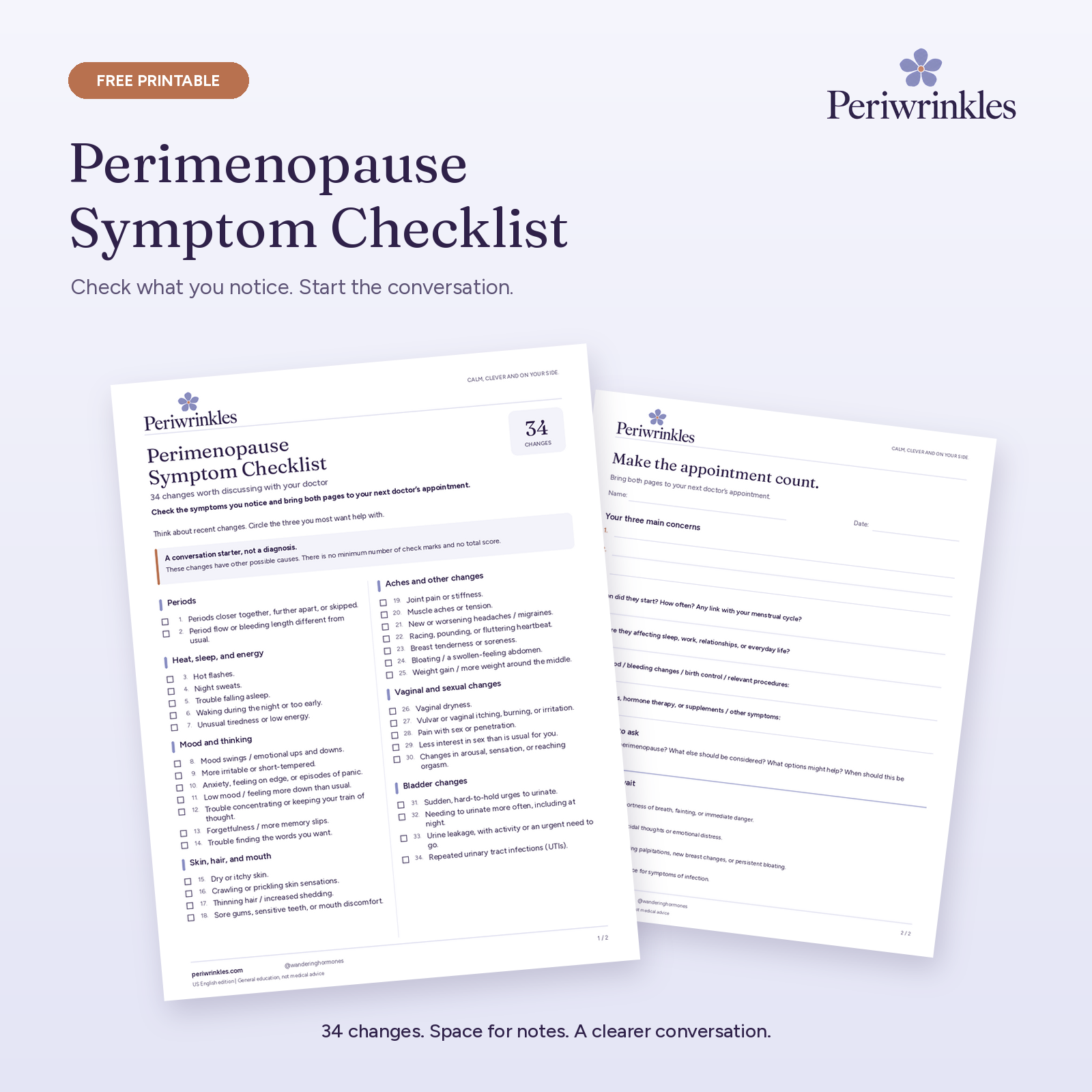
The free Perimenopause Symptom Checklist is a useful companion: it helps you keep track of changes and take your notes into an appointment. Sleep is one piece of the picture; changes in cycles, mood, hot flashes and other symptoms may help your clinician see the fuller pattern.
For a closer look at the evidence, see this review of sleep problems during the menopausal transition, the 2023 review on optimizing sleep across the transition, and NICE guidance on menopause identification and management.
Sleep problems in perimenopause are common, but you don’t have to guess at the cause or settle for “that’s just how it is.” Not imagining it. Not alone. Not out of options.
Periwrinkles shares general health information for education only. It is not medical advice and does not replace care from your own doctor or healthcare provider.