
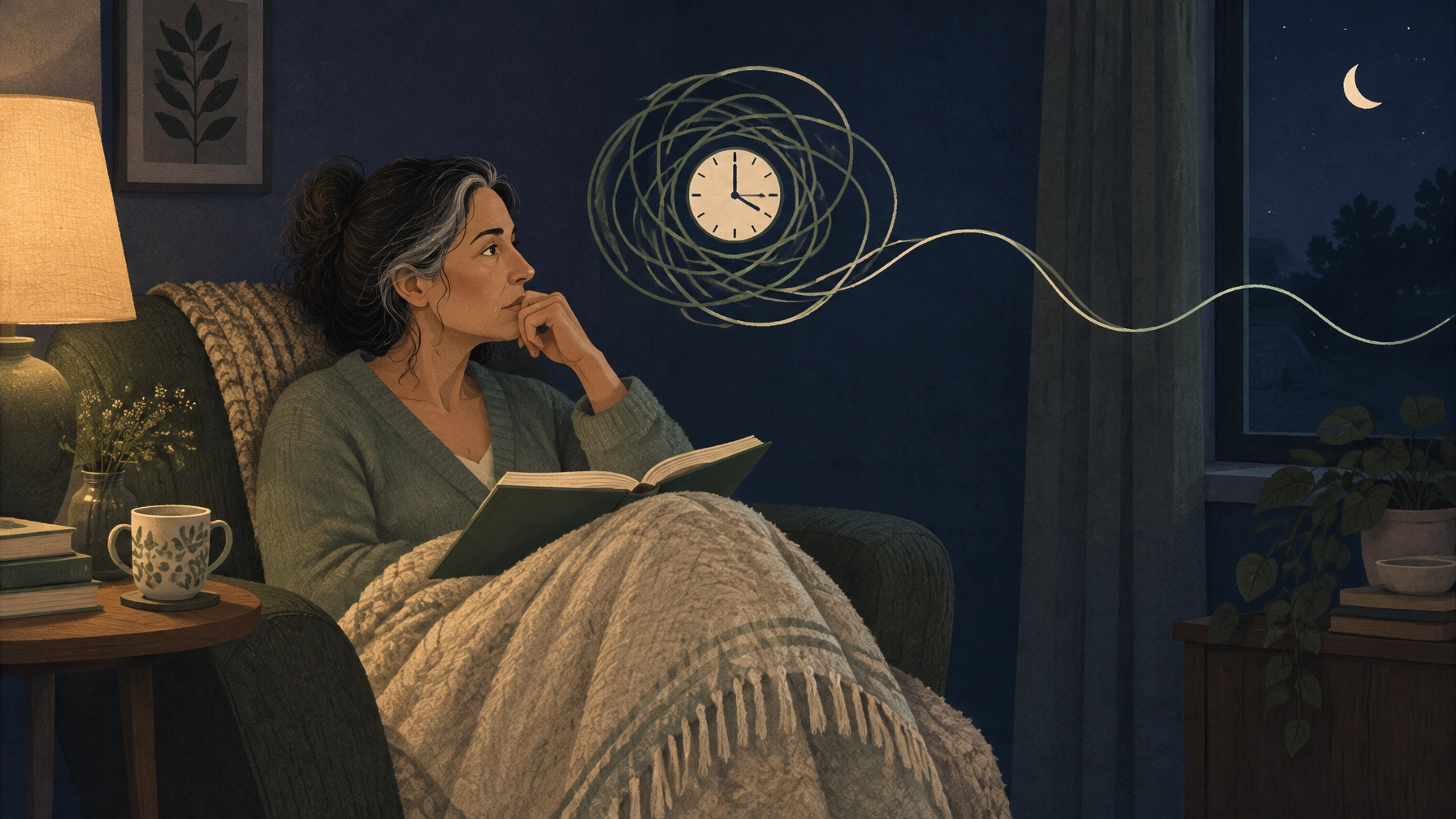
If perimenopause insomnia has you waking at 3 a.m., or somewhere between 2 and 4, wide awake and unable to get back to sleep, you are in very familiar company. Nighttime waking is common during the menopause transition, and night sweats and changing hormones can play a part. But 3 a.m. is not a magic hour when one particular hormone switches on. More often, it is when lighter sleep meets a trigger, and your brain decides it has an appointment.
Why waking at 3 a.m. in menopause can happen
Sleep moves through repeating stages and cycles. Deep sleep tends to be more concentrated earlier in the night, while REM sleep, the stage associated with vivid dreaming, gets longer toward morning. That means sleep is generally lighter in the second half of the night and easier to interrupt, as the National Heart, Lung, and Blood Institute’s guide to the stages of sleep explains.
The time on the clock also depends on your own bedtime and body clock. If you go to bed at 10, the second half of your night arrives at a different time than it does for someone who turns in at midnight. So the pattern can feel strikingly consistent without having one universal cause.
Brief awakenings during sleep can happen. The trouble is when you become fully alert and cannot settle back to sleep. Menopause-related sleep problems can involve both hot flashes and changes in reproductive hormones, and people’s experiences vary, as this review of sleep across the menopausal transition explains. Menopause can also cause insomnia or sleep apnea, and the Office on Women’s Health notes that treating night sweats can help you sleep better.

What might be waking you
There may be one clear culprit, or several small ones taking turns. A brief sleep note can help you notice patterns: jot down your bedtime, wake time, symptoms, dinner, caffeine, and alcohol. A sleep diary is one way to track these details, and the National Heart, Lung, and Blood Institute offers a printable one.
- Night sweats and temperature swings. A hot flash or night sweat can bring an awakening, and menopause-related vasomotor symptoms are linked with disrupted sleep. Not every hot flash wakes every person, but a sudden wave of heat can be an effective, if unwelcome, alarm clock. The Office on Women’s Health describes night sweats and the treatments available.
- The body’s normal early-morning signals. Cortisol follows a daily rhythm and naturally rises toward the usual wake-up time. This is part of normal body-clock activity, not proof that your cortisol is “too high” or that stress hormones alone caused the waking. The National Heart, Lung, and Blood Institute explains how light, melatonin, and cortisol help regulate the sleep-wake cycle.
- Dinner and blood sugar. A long gap after an early dinner, or a meal heavy in refined carbohydrates, might contribute to overnight blood-sugar changes for some people. The connection between those changes and waking is not settled for everyone, so treat this as a possibility, not a diagnosis. A review of sleep, diet, and glucose metabolism describes the proposed connection and its limits.
- Alcohol. It may make you feel sleepy at first, but alcohol can disrupt sleep later in the night as your body processes it. It can also increase urination and is associated with reflux. A review of alcohol and the sleeping brain describes the shift from early sedation to poorer-quality sleep later.
- Needing to urinate. Getting up to pee interrupts sleep, and nighttime urination can have several causes. MedlinePlus lists evening fluids, caffeine, and alcohol among factors that can contribute.
- Restless legs. An uncomfortable crawling, pulling, or tingling feeling, with an urge to move your legs that gets worse while resting, can make it hard to stay asleep. A clinical overview describes these symptoms and their effect on sleep.
- Reflux or pain. Heartburn, regurgitation, or pain can wake you, and sleep disruption and nighttime reflux can feed into each other. A systematic review describes how nighttime reflux symptoms can fragment sleep.
- The 3 a.m. thought spiral. You wake, check the time, and immediately calculate the exact number of hours left before the alarm. Then your mind opens a committee meeting about tomorrow. Worry and frustration can make it harder to fall back asleep; they are part of the experience, not a personal failing. The American College of Physicians’ insomnia guidance describes the role of thoughts and behavioral patterns in CBT-I.
What can help you get back to sleep
There is no single trick that works for every cause, but small, steady experiments can reveal what helps your sleep. Try one or two changes at a time rather than turning bedtime into a performance review.
- Keep the room cool and bedding adjustable. A cooler, darker, quieter sleep space is part of the NHLBI’s healthy sleep guidance. Layers you can add or remove may also make it easier to respond to temperature swings without fully waking to remake the bed.
- Avoid alcohol close to bedtime. If you notice a connection between drinking and 3 a.m. waking, try a stretch without evening alcohol and see whether your sleep changes. Alcohol can disturb the second half of sleep, as sleep research summarized in this review describes.
- Build a steady dinner. Include a protein source and fiber-rich foods, such as beans, vegetables, whole grains, eggs, fish, tofu, or yogurt, according to what suits you. This is a practical experiment, not a guarantee that blood sugar is the cause. A review of dietary carbohydrate and sleep discusses how meal composition may affect overnight metabolism and sleep.
- Keep caffeine early. Caffeine can interfere with sleep, and its effects can last for hours. The NHLBI suggests avoiding caffeine close to bedtime. If sleep is fragile, consider shifting your last coffee or tea earlier and see if it makes a difference.
- Try not to check the clock. Turn it away or put your phone out of reach if you can. Watching minutes disappear tends to give the mind fresh material for its 3 a.m. presentation.
- If you are lying awake for a while, get up. Go somewhere safe and do something quiet in low light, such as reading a few pages. Return to bed when you feel sleepy. This is a core part of stimulus-control strategies used in cognitive behavioral therapy for insomnia.
- Keep a steady wake time and protect your wind-down. A consistent wake time helps support your sleep-wake routine. Make space for a calmer transition before bed, rather than carrying the day’s unfinished business straight to the pillow. The NHLBI’s healthy sleep habits include keeping regular sleep and wake times.

When insomnia keeps happening, CBT-I is worth asking about
If waking at 3 a.m. is becoming a regular pattern and affecting your days, ask a healthcare professional about cognitive behavioral therapy for insomnia, or CBT-I. It uses practical strategies to change sleep-related thoughts and habits. The American College of Physicians recommends CBT-I as the initial treatment for chronic insomnia in adults. Studies have also found CBT-I helpful for insomnia during and after the menopause transition, including in a randomized trial involving people with hot flashes.
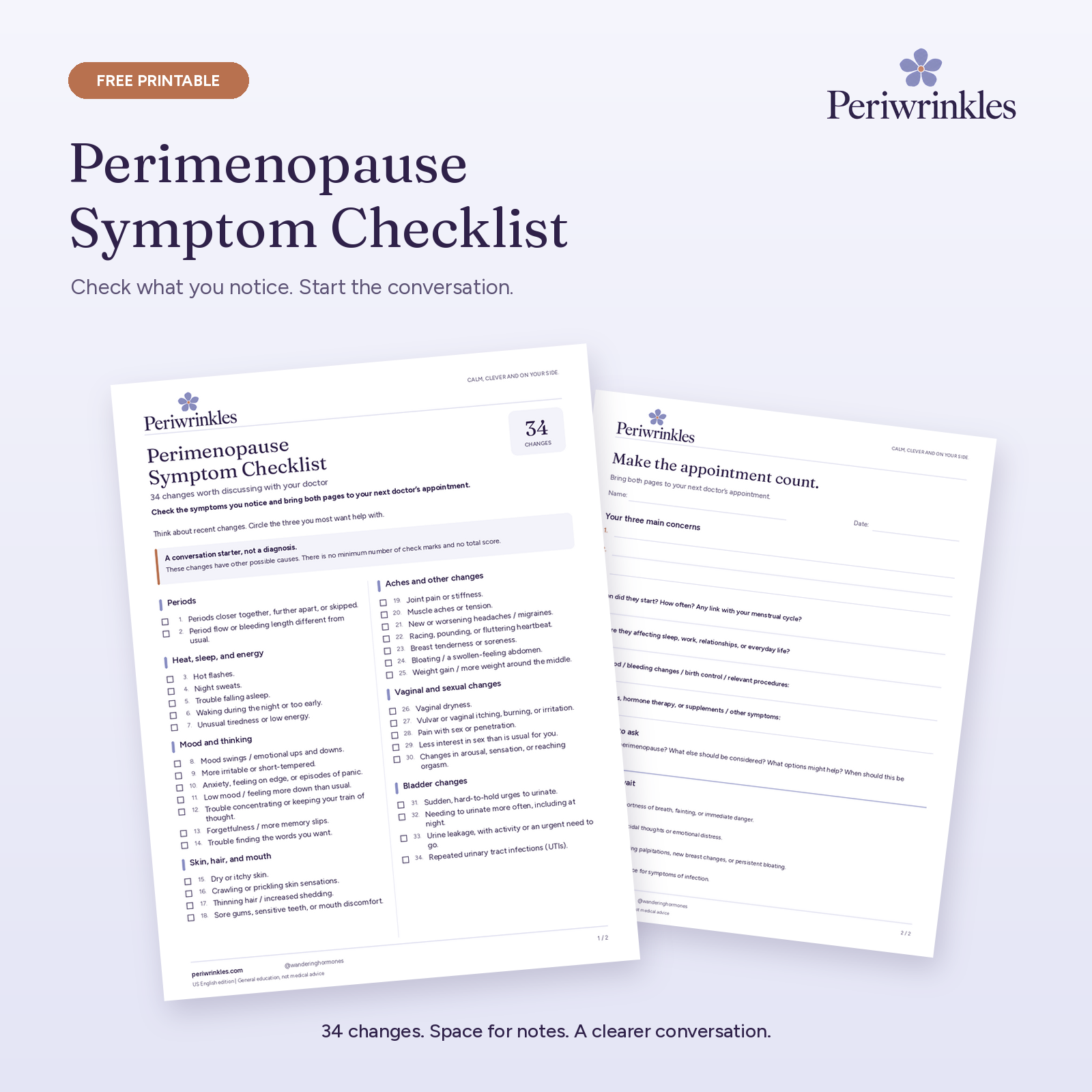
Sleep hygiene alone is not the same as CBT-I. You do not need to become perfect at bedtime to deserve help. For the bigger picture, see our guide to why sleep may not be working in perimenopause. For the full picture of the transition, start with perimenopause explained. The free Perimenopause Symptom Checklist can help you notice which symptoms are showing up together.
When to talk with a doctor
Please bring it up with your doctor if insomnia persists, is affecting your daily life, or you are not sure what is driving it. Mention it if you snore loudly, wake gasping, or feel severely sleepy during the day. These can be signs of a sleep disorder that needs assessment, including sleep apnea.
Also seek advice about heavy or unusual bleeding, ongoing pain, troublesome restless-leg symptoms, reflux that keeps waking you, or persistent low mood. The Office on Women’s Health notes that bleeding after 12 months with no period is not normal and should be checked right away. Sleep problems are common during the menopause transition, but they can have more than one cause. A brief sleep diary and your symptom notes can make a useful starting point for that conversation.
You are not imagining it, not alone, not out of options.
This article is for education only and is not a substitute for personal medical advice, diagnosis, or care. Please talk with your doctor or another qualified healthcare professional about symptoms, treatment options, and what is right for you.