
If menopause weight gain has you wondering whether your body quietly changed the rules, you are not imagining things. The transition can change where fat is stored and how much muscle you carry. But it is not a personal failure, and it does not mean you need to wage war on your body.
A long-term study of women across the menopause transition found that body composition can shift toward more fat and less lean mass, even when the number on the scale does not tell the whole story. Age also plays a role in changes in weight and body composition, so menopause is part of the picture, not the entire explanation.
Menopause weight gain: what may be changing
As estrogen levels fall, the body tends to store more fat around the abdomen and less around the hips and thighs. Research on ovarian hormones and body fat describes how estrogen is involved in fat distribution. That does not mean every person will see the same change, or that a waist measurement can tell you everything about your health.
Muscle mass can also decline through midlife. Muscle supports everyday movement and uses energy, so carrying less of it may contribute to lower energy needs. Studies tracking women through the transition describe changes in both fat and lean mass. Metabolism does not suddenly fall off a cliff, but shifts in muscle, activity, sleep, and other factors can make old routines feel less effective.

Everyday life matters, too. Broken sleep, stress, less movement during the day, and changes in eating or drinking habits can all play a part. Sleep difficulties are common during the menopause transition, and disrupted sleep may make it harder to keep up the routines that help you feel well.
Stress and cortisol get talked about as if they explain every change around the middle. The relationship is more complicated than that. Reviews of midlife weight changes discuss stress alongside many other influences; there is no single hormone or habit to blame for every body change.
More sweet or highly processed foods can become part of the picture, especially when you are tired, rushed, or looking for an easy pick-me-up. The CDC explains that added sugars contribute calories with few nutrients. Alcohol can add calories, and it can interfere with sleep; the National Institute on Alcohol Abuse and Alcoholism outlines alcohol’s effects on the body. None of this means you need to ban foods or never enjoy a drink. It means noticing what helps you feel good, and what may be getting in the way.
What helps: build strength, not shame
The aim is not to punish your body into becoming smaller. It is to support strength, muscle, bone, and metabolic health. Those are worthwhile goals at any size, whether or not your weight changes.
Put protein on the plate
Including a protein source at meals can help you meet your body’s needs and support muscle alongside strength training. Think eggs, fish, poultry, yogurt, tofu, beans, lentils, or nuts and seeds. The right choices and amounts vary from person to person, so there is no magic menopause protein number you have to hit. This review of nutrition during the menopause transition discusses protein and other changing nutritional needs.
Periwrinkles’ free nutrient-rich food list is a handy companion for everyday ideas, including foods that provide protein, fiber, and nutrients important for bones.
Lift weights and challenge your muscles
Strength training helps maintain and build muscle. It also supports bone health, which matters through midlife and beyond. Aim for movement that challenges your muscles, while staying at a level that feels safe and workable for you. That might mean resistance bands, body-weight exercises, machines, or dumbbells. You do not have to arrive at a gym already knowing what you are doing.
U.S. physical activity guidelines recommend muscle-strengthening activity on at least two days each week. If you are new to lifting, have pain or an ongoing health condition, or are unsure where to begin, ask a qualified health professional to help you choose a safe starting point.
A menopause diet plan without the food rules
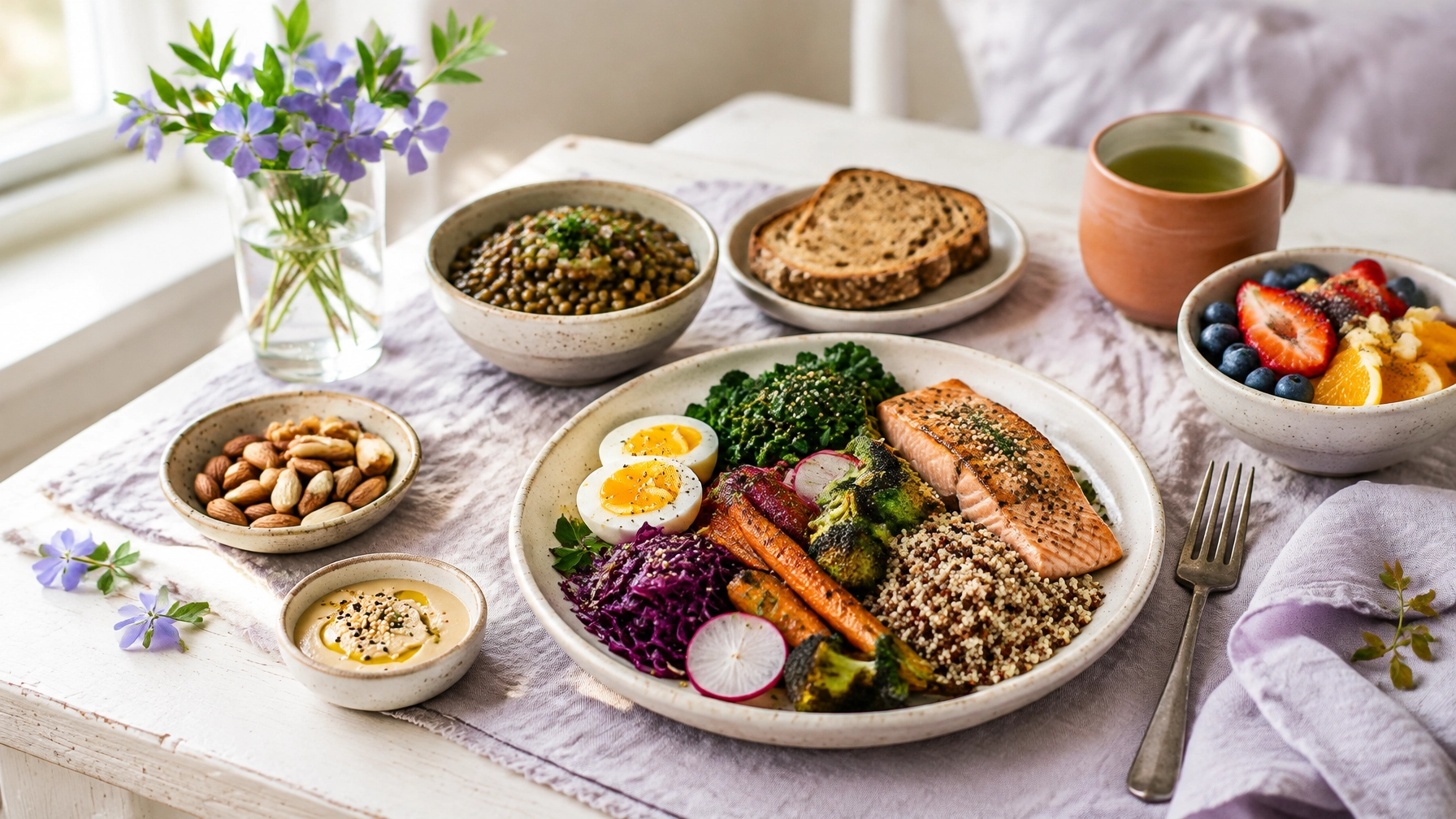
A useful menopause diet plan does not need to be a strict menu, a list of forbidden foods, or a spreadsheet that follows you around. Start with regular meals that include protein, vegetables or fruit, and a source of fiber such as beans, lentils, oats, whole grains, nuts, or seeds. Fiber supports digestive health, and MedlinePlus offers a plain-language guide to fiber and food sources.
Pairing foods this way is a practical approach to nourishing yourself and supporting steadier meals. It is not a guarantee of weight loss or a reason to fear carbohydrates. If you want a simple starting point, add a fiber-rich food to a meal you already enjoy. A bowl of oats with yogurt and fruit counts. So does beans in a soup you made because it is Tuesday and everyone is hungry.
Make room for sleep and daily movement
When sleep is regularly interrupted, the basics can feel harder. A consistent bedtime routine, a cool and comfortable bedroom, and a wind-down that suits you may help support better rest. For more ideas, see our article on 10 reasons sleep isn’t working in perimenopause. If sleep problems are affecting your daily life, talk with your doctor about what may be contributing.
Movement does not have to mean a punishing workout. Walking, gardening, taking the stairs, dancing in the kitchen, or standing up to stretch between tasks all count as ways to move through the day. U.S. activity guidelines include walking and other moderate-intensity activity. Choose something you can imagine doing again next week. Consistency tends to be more useful than one heroic workout followed by three days of negotiating with your legs.
Notice alcohol and stress without blaming yourself
If alcohol seems to worsen your sleep or leave you feeling less rested, try noticing what happens when you drink less or leave it out on some evenings. That is information, not a test of your character. Stress management can be practical and small: a walk outside, a few slow breaths, time with someone you trust, or a behavioral therapy approach if stress or sleep is becoming hard to manage.
Let go of crash dieting
Severely restrictive plans can be difficult to sustain and may make it harder to get the variety of nutrients your body needs. The National Institute of Diabetes and Digestive and Kidney Diseases offers guidance on choosing a safe, sustainable weight-management program. You do not need to earn food, make up for a meal, or treat your body like a project that is behind schedule.

Realistic expectations: look beyond the scale
The scale cannot show whether you are getting stronger, sleeping better, or feeling more at home in your body. Body composition can change without a dramatic change in weight, and progress may look like carrying groceries more easily or having steadier energy. Research following body composition through the menopause transition helps explain why scale weight alone does not tell the full story.
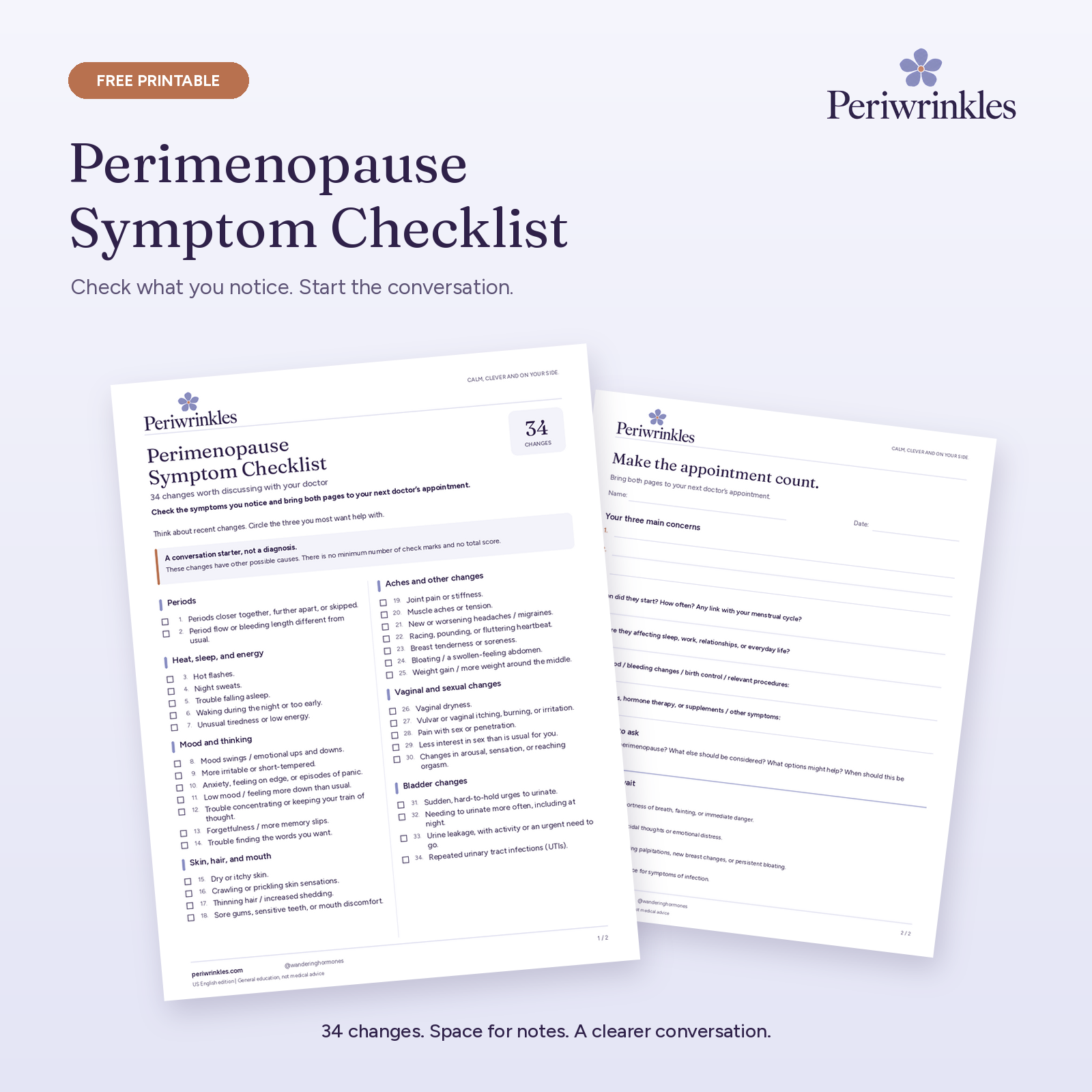
If your weight changes quickly or unexpectedly, or you are concerned about your health, make time to talk with your doctor. Bring notes about what you have noticed, when it began, and any other symptoms. The free Perimenopause Symptom Checklist can help you organize those observations before an appointment.
Your body is changing, not failing. Strength, nourishing food, sleep, and movement are worth supporting whether or not the scale moves. You are not imagining it, not alone, not out of options.
This article is for education only and is not medical advice. It does not replace care from your doctor or another qualified health professional. Talk with your doctor about your symptoms and what is right for you.