
A plain-English guide to perimenopause symptoms, what’s changing, and what may help. If your periods, sleep, mood, memory, or body seem to have acquired new settings without asking you first, there may be a reason. You’re not imagining it.
What perimenopause actually is
Perimenopause is the transition into menopause. It is a stage of life, not a disease, and not a single dramatic moment when your body flips a switch. During this transition, the ovaries’ hormone production becomes less predictable. Periods may change, and symptoms may come and go. The Office on Women’s Health explains perimenopause as the time before menopause when hormone levels change.
Estrogen and progesterone levels can fluctuate during perimenopause and generally decline as the transition progresses. These hormones act in nearly every system of the body, which is why changing levels can affect so much more than periods. The result can feel confusing: one month you may feel much like yourself, and the next, sleep or temperature control seems to have joined a very inconvenient committee. The Office on Women’s Health describes how estrogen, progesterone and testosterone affect sleep, mood, hair, skin, bones, joints, muscles, bladder, genital tissue and weight.
Perimenopause, menopause, and postmenopause: what’s the difference?
- Perimenopause is the transition leading up to menopause. Periods may become irregular, and symptoms may begin.
- Menopause is confirmed after 12 months in a row with no period, including no spotting.
- Postmenopause is the time after that final menstrual period and the 12-month mark.
That 12-month definition is why a long gap between periods, by itself, doesn’t confirm menopause. The Office on Women’s Health explains how menopause is defined and how it differs from perimenopause. One more thing worth knowing: you can still become pregnant during perimenopause, even if you skip periods, so birth control is a conversation to have with your doctor.
When does perimenopause start, and how long does it last?
Perimenopause usually begins in the mid-to-late 40s, though some women notice symptoms in their mid-to-late 30s. The Office on Women’s Health puts the average at about four years, with some women experiencing up to 10 years leading into menopause.
That range matches the research. In the Study of Women’s Health Across the Nation, the median length of the transition ranged from about 4.4 years to 8.6 years, depending on how old a woman was when it began. Starting earlier tended to mean a longer transition, and smoking was linked to an earlier start and a shorter one. So if it feels like this has been going on for years, that may be exactly what’s happening.
If symptoms start earlier than expected, or you’re under 45 and your periods have changed, it’s worth discussing with a healthcare professional. Timing and medical history affect what assessment is useful. NICE recommends considering tests in some people aged 40 to 45 with symptoms and cycle changes, and the Office on Women’s Health advises asking about testing if your periods stop before age 40.
Perimenopause symptoms: the honest, not-everyone-gets-everything list
Perimenopause symptoms vary widely. Some women have a few mild changes; others have symptoms that disrupt daily life. You don’t need to collect every item on this list to have a real experience. The Office on Women’s Health notes that symptoms can be mild, moderate or severe, and that they go well beyond hot flashes.

Cycle changes
Your period may arrive earlier or later, or the time between periods may change. Flow can become heavier or lighter, and a cycle that once ran like a reliable train schedule may start freelancing. Cycle changes are a common feature of the transition. ACOG explains how period changes can occur around perimenopause.
Hot flashes and night sweats
A hot flash is a sudden feeling of heat, often with flushing and sweating. Night sweats are hot flashes that happen during sleep. They can happen with or without a noticeable trigger. The Office on Women’s Health describes hot flashes and night sweats, and the treatments available.
Sleep disruption and fatigue
You may have trouble falling asleep, wake during the night, or struggle to get back to sleep. Night sweats, bladder symptoms and mood changes can all disrupt sleep, and menopause can also cause insomnia or sleep apnea. The Office on Women’s Health advises telling your doctor about trouble sleeping. For the very familiar “why am I so tired?” question, read our guide to why you wake at 3am and 10 reasons sleep may not be working in perimenopause. Our article on perimenopause fatigue is coming soon.
Mood and anxiety changes
Some women notice irritability, anxiety, or symptoms of depression. That doesn’t mean every difficult feeling is caused by hormones, or that you should have to shrug it off. The Office on Women’s Health lists mood changes, anxiety and depression among perimenopause symptoms.
Brain fog and memory
You might forget words or find it hard to focus. It can be frustrating, but it doesn’t mean you’re making it up. The Office on Women’s Health notes that these changes are common in perimenopause and often improve after menopause.
Body composition and weight shifts
Body shape can change during midlife, including changes around the waist and in muscle and bone. Weight is affected by many factors, so it’s rarely useful to blame one hormone or one habit. The Office on Women’s Health describes how menopause can affect weight, muscle and bone. Our article on what’s actually changing with menopause and weight goes into more detail.
Vaginal dryness and bladder changes
Lower estrogen can affect the tissues of the vagina, vulva, bladder and urinary tract. Health professionals call this genitourinary syndrome of menopause, or GSM. Symptoms include vaginal dryness, burning or irritation, pain during sex, a sudden or frequent need to urinate, and repeat urinary tract infections. The Office on Women’s Health notes that GSM can be treated, so it’s worth raising rather than tolerating.
Skin, hair, and joints
Skin may feel drier or thinner, and achy joints and muscles are common. In a review of 37 studies, 57% of women in perimenopause reported muscle or joint pain, compared with 40% before perimenopause. These experiences can have causes beyond perimenopause, so new or worsening pain deserves attention rather than an automatic “well, I’m in my 40s now” dismissal.
Low libido
Your interest in sex can change, and it varies from person to person. It may be influenced by sleep, mood, comfort, relationships and other parts of health. It is not a character flaw, and it’s okay to talk about. The Office on Women’s Health discusses changes in sexual desire and the treatments that can help.
How is perimenopause diagnosed?
There is no single test that diagnoses perimenopause. In most cases a healthcare professional can tell from your age, your symptoms and changes in your periods, and the Office on Women’s Health notes that blood hormone tests are not usually needed. Hormone levels fluctuate during the transition, so one reading may not tell the whole story. If your periods stop before age 40, that is different, and testing is worth asking about.
A good conversation should also leave room for other explanations. Thyroid problems, anemia, depression and other conditions can overlap with some symptoms and may need their own assessment. NICE describes when further tests may be needed, and ACOG discusses checking other causes when periods change.
What helps with perimenopause symptoms?
There isn’t one lifestyle formula that makes every symptom disappear. But movement, strength-building activity, nourishing meals, sleep routines and support are practical foundations for health through the transition. NICE highlights maintaining muscle mass and strength through physical activity during menopause, and the CDC outlines adult activity guidance that includes aerobic movement and muscle-strengthening activity.

A few grounded places to start:
- Make strength and movement doable. Choose activity you can return to, and build gradually. Strength work supports muscle and bone, and NICE recommends physical activity to help maintain muscle mass and strength.
- Eat regularly and include protein-rich foods. A varied, satisfying eating pattern supports general health; there is no special perimenopause menu you must get exactly right. Our nutrient-rich food list is a practical place to explore food sources.
- Notice alcohol, stress, and sleep patterns. If you see a connection between a habit and sleep or hot flashes, that’s useful information, not a reason for shame. A consistent wind-down routine can make sleep more manageable, and the Office on Women’s Health explains how night sweats, bladder symptoms and mood changes can disrupt sleep, and advises telling your doctor.
- Ask for support that fits your life. Cognitive behavioral therapy and mindfulness-based stress reduction may help with depression and anxiety during perimenopause, according to the Office on Women’s Health.
Hormone therapy, without the hierarchy
Hormone therapy is not a fallback, and it is not a last resort. It replaces the hormones your body is producing less of, and for many women it is the most effective treatment for troublesome symptoms such as hot flashes and night sweats. The Office on Women’s Health lists hormone therapy among the FDA-approved treatments for moderate to severe hot flashes, alongside non-hormone medicines, and each option carries its own benefits and risks.
Whether it suits you depends on your symptoms, your health history and your preferences. The Office on Women’s Health has a plain-language guide to hormone therapy safety, and its overview of menopause treatment sets out the options, including low-dose vaginal estrogen for genital and urinary symptoms. This is not a one-size-fits-all decision, and it isn’t one to rule in or rule out before speaking with your prescribing health professional.
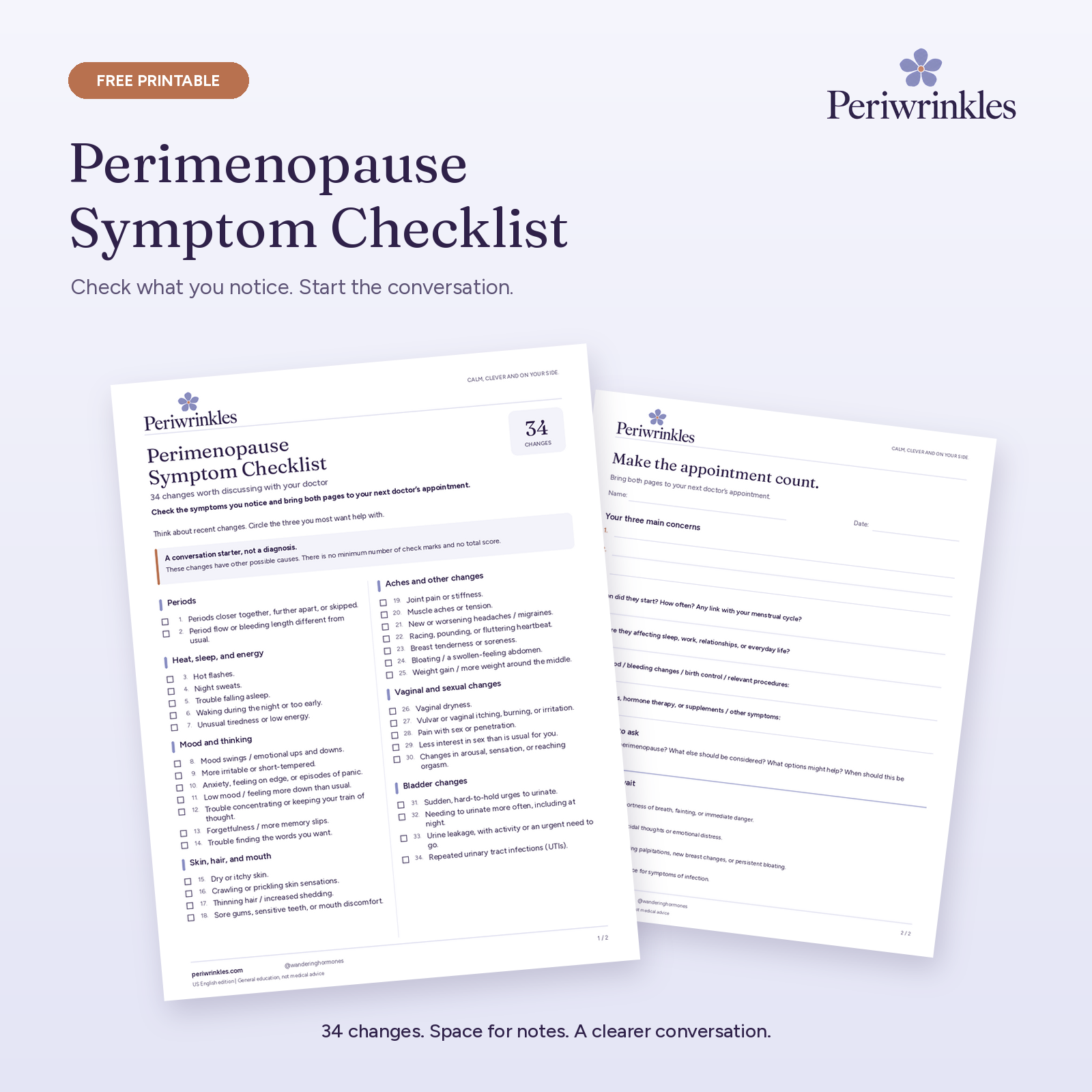
A useful appointment starts with what you’re experiencing. The free Perimenopause Symptom Checklist can help you notice patterns and prepare questions, along with your health history, any hormone therapy you’ve used, and how long it’s been since your last period. Bring it along, add your own notes, and ask for your symptoms to be taken seriously.
Perimenopause is a transition, not a test you have to pass. You’re not imagining it, not alone, not out of options.
Periwrinkles shares health information for education only. This article is not medical advice and does not replace care from your healthcare professional. Talk with your doctor about your symptoms, concerns, and individual health needs.