
Hot flashes can feel like someone has opened a furnace inside your chest, then switched it off before you’ve worked out what happened. The heat rises, your face may flush, sweat arrives, and your heart may race. Off come the layers. A few minutes later, you may be chilly and reaching for the cardigan again. The cardigan economy is booming. You’re not imagining it.
What are hot flashes?
A hot flash is a sudden wave of heat, often with flushing and sweating. Some people also notice a racing heart or feel cold or shivery afterward. An episode commonly lasts a few minutes, though the experience varies. A night sweat is the same kind of hot flash happening during sleep. The Office on Women’s Health describes hot flashes and night sweats as common menopause symptoms and a clinical review describes the heat, sweating, flushing, chills, and usual episode length.
Why do hot flashes happen?
The short version: as estrogen levels fall and fluctuate during the menopause transition, the brain’s temperature-regulating system can become more sensitive. The body’s comfortable temperature range narrows, so a small change in temperature may prompt an outsized response, like sweating and flushing. The precise biology is still being studied, so a simple explanation is more honest than pretending every detail is settled. Research reviews describe the link between changing estrogen, temperature regulation, and the body’s response to small temperature shifts.
How common are hot flashes, and how long do they last?
Hot flashes and night sweats are very common during the menopause transition. In the Study of Women’s Health Across the Nation, around 60% to 80% of participants reported vasomotor symptoms at some point during the transition. How often they happen, how much they bother you, and how long they continue can vary considerably. The study’s review of prevalence and group differences explains that variation.
“Several years” can undersell it. Among participants with frequent symptoms in the SWAN study, the median total duration was 7.4 years. For those who had a final menstrual period during the study, symptoms continued for a median of 4.5 years after it. A median is the midpoint, not a deadline: some people have shorter symptoms, while others have them for longer. The long-running SWAN study reports these duration figures.
Hot flashes are not the same for every woman
This is one place where the old picture of menopause, drawn almost entirely from white women, has been badly incomplete. Race and ethnicity shape how long hot flashes last, and by how much.
In the same SWAN analysis, median total duration of frequent hot flashes and night sweats was 10.1 years for African American women, 8.9 years for Hispanic women, 6.5 years for non-Hispanic white women, 5.4 years for Chinese women and 4.8 years for Japanese women. Every difference between groups was statistically significant apart from Chinese compared with Japanese. SWAN is one of very few studies large enough to compare five racial and ethnic groups, and it reports these differences in full.
African American women were also the most likely to report symptoms, and Chinese and Japanese women the least likely. The reasons are not yet known. The researchers looked at body weight, education, financial strain and stress, and those factors did not explain the gap, which means something about the experience of menopause itself is not being captured yet. That is a gap in the science, not in your body.
What does this mean for you? If you are Black or Hispanic and your hot flashes have been going on for years, you are not an outlier and you are not exaggerating. The data say your symptoms are likely to last longer than the textbook figure, and that is worth saying out loud to your prescribing health professional when you ask about treatment. And if you are East Asian, a shorter course is more common, but shorter does not mean easy: it means your experience may not match what you were told to expect.
Group averages cannot tell you what your own transition will do. They can tell you that the version of menopause in most brochures was not written about everyone. The Office on Women’s Health discusses symptoms and treatment without assuming one experience.
How to stop hot flashes: what actually helps
There isn’t one trick that works for everyone. The right support depends on how much symptoms affect you, your health history, and what matters to you.
Hormone therapy
Let’s be clear: hormone therapy is the most effective treatment for troublesome hot flashes and night sweats for many women. The FDA has approved hormone therapy to reduce moderate to severe hot flashes. It is not a last resort, and you do not have to try lifestyle changes first. Whether it suits you is a personal decision to make with your prescribing health professional, who can discuss your symptoms, health history, and the benefits and risks for you. The Office on Women’s Health explains treatment choices and FDA-approved uses, and its hormone therapy safety page covers individual risks and shared decisions.
If you have a uterus, whole-body estrogen is paired with progesterone, which protects the lining of the uterus. Progesterone is a hormone your body produces; a progestin is a synthetic look-alike, not a hormone, and it carries its own risks, which is worth asking about specifically. Vaginal estrogen treats vaginal symptoms, such as dryness and discomfort, rather than hot flashes. The Office on Women’s Health explains the difference between whole-body and vaginal hormone therapy.
Non-hormone care
Non-hormone prescription options also exist for people who cannot or do not want hormone therapy. These are a conversation with your doctor, not a reason to self-prescribe. The Office on Women’s Health lists examples and explains that these options should be discussed with a health care provider.
Cognitive behavioral therapy (CBT) and clinical hypnosis are non-medicine options with evidence for reducing how much hot flashes bother you. CBT can help with the thoughts, feelings, and responses that make symptoms more difficult to cope with. A randomized trial found that CBT reduced the impact of hot flashes and night sweats for women after breast cancer treatment, while a review describes evidence for CBT across different formats and groups. The Office on Women’s Health includes CBT and clinical hypnosis among non-medicine options; the randomized trial reports its findings, and the review discusses the wider CBT evidence.
Comfort for the moment
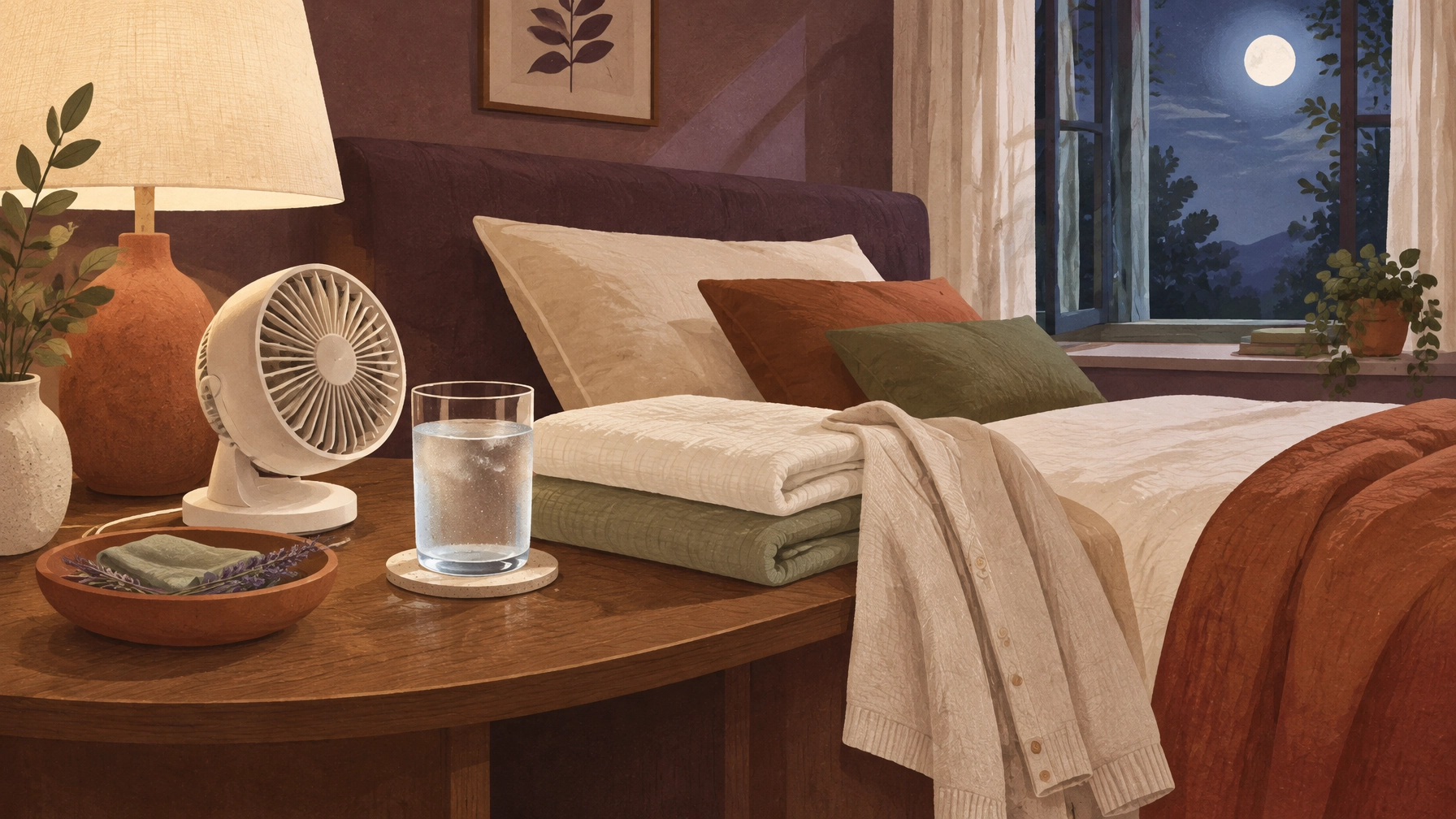
Layers you can take off easily, a fan, a cooler room, a cold drink, and breathable clothing or bedding may help you manage the discomfort when a flash hits. Think of these as ways to get through the moment, not a guaranteed way to prevent the next one. The Office on Women’s Health offers practical guidance on menopause symptoms and relief.
Triggers: what the evidence actually says
Spicy food, caffeine, alcohol, hot drinks, stress, warm rooms, and tight clothing often appear on trigger lists. But people’s experiences differ, and research on many individual triggers is mixed. For example, a review of SWAN findings reported that caffeine and alcohol intake were not associated with hot flashes after accounting for other factors. That does not prove they never affect anyone; it means a blanket rule is not supported for everyone. The Office on Women’s Health discusses hot flashes and symptom relief, and the SWAN review covers the less consistent findings around diet and lifestyle.
Rather than cutting out half your kitchen based on an internet list, notice your own patterns. If you suspect something is setting off flashes, jot down what happened and when. If a pattern seems consistent, you can decide whether changing that one thing is worth trying.
Weight and smoking, without blame
Some studies have found that smoking and higher body weight are associated with more frequent or bothersome hot flashes in some groups, particularly during parts of the menopause transition. These are associations, not personal failings or guarantees about what will happen to you. Higher weight does not mean hot flashes are your fault, and weight loss cannot be promised to end them. The SWAN review describes the associations and their limits.
If you smoke and want support to quit, that can be a conversation with your health professional. You deserve care without blame, whatever your body looks like or what your history has been.

Hot flash myths, busted
“Hot flashes are just a nuisance you have to endure.”
They can affect daily life and sleep, and treatment options are available. You do not have to wait until you are at breaking point to ask for help. The Office on Women’s Health outlines ways to discuss menopause symptoms and treatment.
“Everybody gets relief by cutting out coffee or spicy food.”
No. Triggers are individual, and research on specific foods is mixed. Notice your own patterns instead of following a one-size-fits-all ban. The Office on Women’s Health discusses symptoms and relief.
“You have to wait until the hot flashes stop before getting help.”
No. If symptoms bother you, talk with a health professional about what might suit you. The Office on Women’s Health recommends discussing symptoms and treatment options with your provider.
“Hormone therapy is only a last resort.”
No. It is an effective treatment for many people with troublesome hot flashes and night sweats. Whether it is right for you is an individual decision with your prescribing health professional. The Office on Women’s Health explains hormone therapy’s role and the shared decision-making process.
“Black cohosh and other supplements are proven to work.”
Some women find black cohosh helpful, and the research is more encouraging than the old dismissal suggested. A 2023 review of 22 studies found black cohosh extracts were potentially beneficial for overall menopause symptoms, with improvements in hot flashes but not in anxiety or depression. It is generally well tolerated, and rare reports of liver problems have been raised, so it is worth knowing the signs and choosing a product from a reputable brand. If you take prescription medicines, it is worth checking interactions with a trusted health professional. The National Center for Complementary and Integrative Health summarizes the evidence and safety concerns.
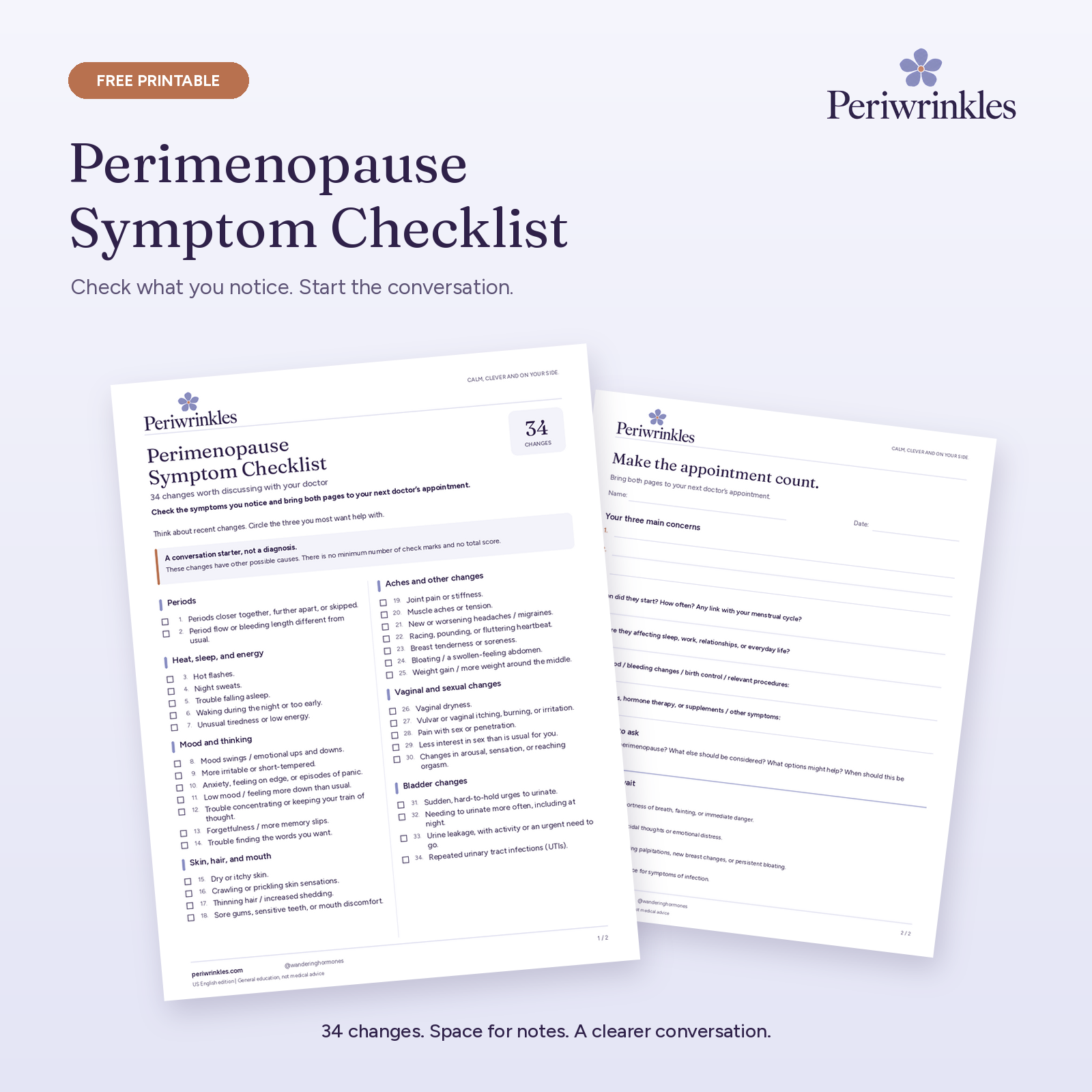
Hot flashes are one part of a much bigger transition. If you want to see how symptoms may connect, start with our perimenopause explainer. If night sweats are disrupting your rest, our articles on sleep in perimenopause and waking at 3 a.m. may help you put the pieces together. You can also take our free Perimenopause Symptom Checklist to help prepare for a conversation with your health professional.
You are not imagining it, not alone, not out of options.
Periwrinkles provides health information for education only. This article is not medical advice and does not replace care from your health professional. Talk with your doctor or prescribing health professional about your symptoms, concerns, and individual health needs.